Make sense of perimenopause and menopause
per visit*
or $140 per visit self-pay
HSA/FSA accepted
475+ insurance plans accepted, including Aetna, Anthem, Cigna, Blue Cross Blue Shield, and UnitedHealthcare
*Coverage and costs vary by plan. Being in-network does not guarantee your plan covers these services. Price does not include medication costs.

What you're feeling? It's all connected.
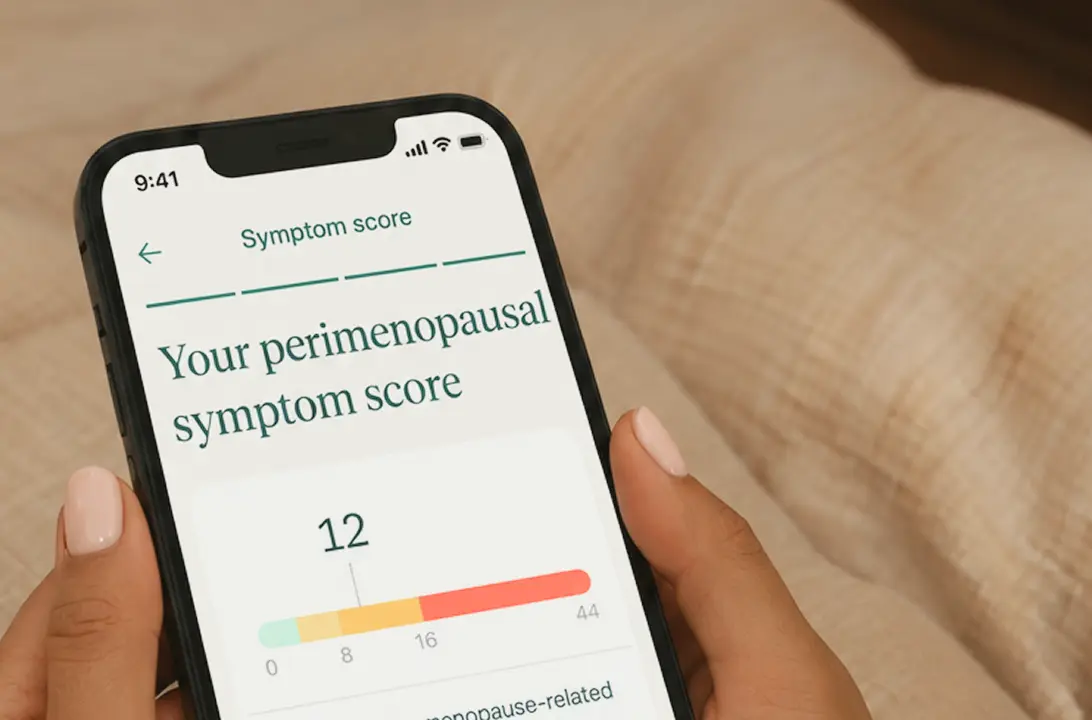
There's more going on than any single symptom. See the full picture.
Check your coverage
We’ll confirm your coverage before you book. If Maven is out of network with your plan, you can still book* with self-pay.
Complete your health assessment
Share your symptoms, health history, and goals—including the ones you might not think are related.
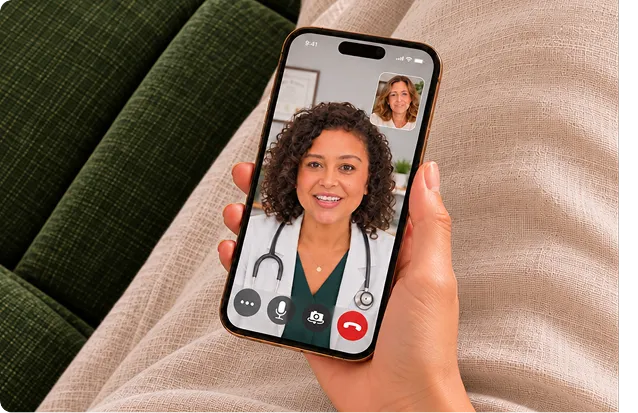
Meet with a menopause-trained specialist
They review your assessment before your first visit, so you're not starting from scratch. Together, you’ll build a plan for where you are.
Get treatment and ongoing support
If treatment is right for you, prescriptions can be sent directly to your pharmacy. Book follow-up visits or message your clinician as needed.
*Coverage and costs vary by plan. Being in-network does not guarantee your plan covers these services. Price does not include medication costs.
How insurance works with Maven
Virtual Visits
With Maven, you can see providers who are in-network with most commercial insurance plans. What you’ll pay depends on your plan’s copay, coinsurance, or deductible. Being in-network does not guarantee your plan covers these services. See your estimated cost before you book.
Prescriptions
Billed separately. Filled at your pharmacy and billed under your pharmacy benefit. Your cost depends on your plan’s drug coverage
No insurance or out of network?
Self-pay is available at $140 per visit, and you can use your HSA/FSA.
Book nowThere’s more than one way to treat this. Let’s find yours.
Brand-name medications, covered by insurance. Copays may apply.
Coverage and costs vary by plan. Being in-network does not guarantee your plan covers these services.

Birth control (pill, patch or vaginal ring)
Can reduce irregular bleeding, mood shifts, and hot flashes by stabilizing hormone levels. Your clinician can also refer you for in-person care for injections or an IUD.

Vaginal estrogen (cream or tablet)
Low-dose estrogen applied locally to relieve vaginal dryness, irritation, and pain or discomfort during sex with minimal absorption into the rest of the body.

Estrogen + Progesterone (patch, gel, spray, pills)
Estrogen and progesterone combined to relieve hot flashes, sleep disruption, and mood changes—while protecting the uterine lining. Prescribed separately so your clinician can tailor each dose to your body.

Estrogen only (patch, gel, pill)
Estrogen on its own to relieve hot flashes, sleep disruption, and mood changes. Typically delivered as a patch or gel for consistent absorption.
Access the whole practice
Get support for the whole picture, not just what brought you here.




From the women in the middle of it

“The holistic view and approach for managing perimenopause and menopause has been life changing! Nearing 50, I am in the best physical shape with support from the physical support and nutrition coaches.”—Dara

“Navigating perimenopause has been difficult. I was having symptoms, but my physical and labs came back normal. After speaking with a Maven provider, I felt like someone understood what I was going through and that I wasn’t crazy!”—Alison

“My in-person doctors are great, but they can't compete with the entire team I can meet with on Maven. I’ve met with a Wellness Coach, Physical Support coach, OB-GYN, Career Coach, Naturopath and many more. My daughter calls them my ‘entourage’ during my Taylor Swift Menopause era.”—Denise, Maven Ambassador

“I started using Maven because I was looking for answers and support during perimenopause. What stood out immediately was how understood I felt. The providers didn’t dismiss my symptoms, they helped me make sense of the changes happening in my body and gave me practical, personalized support.”—Debbie
The care you should've had all along
Covered by insurance
In-network with 475+ insurance plans nationwide*
*Coverage and costs vary by plan. Being in-network does not guarantee your plan covers these services.
Menopause-trained specialists
4.95/5 average appointment rating
Care that connects it all
30+ women's and family health specialities in one place

Your questions, answered
How do I know if I’m in perimenopause?
Perimenopause typically begins in your 40s (though it can start earlier) and may include irregular cycles, sleep disruption, mood changes, brain fog, hot flashes, and joint pain. Many symptoms overlap with other conditions, which is why a provider review is helpful. We'll review your history and symptoms to help you understand what's happening.
Is hormone replacement therapy (HRT) safe?
For most women, HRT can be safe and effective when prescribed appropriately but is not suitable for everyone. While earlier studies raised concerns, current research shows HRT can reduce symptoms and help protect heart, bone, and brain health—especially when started during perimenopause or early menopause. Your provider will review your personal health history, discuss risks and benefits, and help determine if it's right for you.
Why is Maven qualified to provide hormone care?
Our clinicians specialize in perimenopause, menopause, and postmenopause—the full continuum of hormonal change, not just the moment of transition. They're trained to distinguish between symptoms that respond to hormone therapy and those that need a different approach, and to factor in your health history, cancer risk, and reproductive background. That specificity shapes your care plan.
What hormone therapy options does Maven offer for menopause?
We prescribe a range of options tailored to your symptoms and health history, including birth control, vaginal estrogen, estrogen-only therapy, and combined estrogen and progesterone (prescribed separately so your clinician can dial in each dose). For women who prefer or aren't candidates for hormonal treatment, we also prescribe non-hormonal options including SSRIs/SNRIs, gabapentin, and medications for incontinence. Your provider will recommend what fits.
Can I get HRT if I’ve had a hysterectomy?
Yes. Treatment options differ slightly depending on whether you have a uterus, but HRT is still an option. Your provider will recommend the right formulation for you.
What if I’m already on HRT but it’s not working?
Your provider can review your current treatment, adjust your dosing or formulation, and optimize your plan. Many women aren't on the right dose or delivery method for their needs.
Does Maven Hormone Care accept insurance?
Yes! Hormone Care providers on Maven are in-network with over 475 commercial insurance plans nationwide. Coverage varies by plan and state, so start by checking your eligibility. Being in-network does not guarantee your plan covers these services. Our eligibility check is quick, and you don’t have to book anything. If your plan isn’t accepted or you’d rather not use insurance, you can choose our self-pay option instead. Either way, you’ll get the same care team and a personalized plan.
What insurance plans does Maven accept?
Maven accepts most commercial insurance plans nationwide, including:
- Blue Cross Blue Shield
- Anthem
- United Healthcare
- Aetna
- Horizon
- CareFirst
- Premera
How do I check whether my plan is accepted?
You can check your eligibility in just a few minutes after creating an account. Once you’ve signed up, you’ll enter your insurance details and we’ll let you know whether your plan is accepted and what the estimated appointment cost will be.
What if my plan isn’t in-network?
If your plan isn’t in-network, you can still proceed with our self-pay option per visit. Self-pay for hormone care is $140 per visit. Medication costs are billed separately and may also be covered by your insurance depending on your specific pharmacy benefits.
If your plan has out-of-network coverage, you may be able to receive a partial reimbursement from your insurer by requesting a superbill from our Support team. Check your insurance to see if you are eligible for out-of-network coverage.
Does Maven Hormone Care accept Medicare, Medicaid, or HMO plans?
Maven Hormone Care does not accept Medicaid, Medi-Cal, TRICARE, or original Medicare plans at this time. If you are enrolled in one of these plans, you are still able to join Maven Hormone Care through our self-pay option.
Maven Hormone Care does accept Medicare Advantage (Part C) plans, and coverage depends on your specific plan. HMO plans may also be accepted, depending on your specific insurance carrier and plan. To see if your plan is covered, create an account and proceed with the eligibility check. We’ll let you know if your plan is in-network and what your estimated cost for an appointment will be.
What does insurance cover, and what do I pay out of pocket?
Your medical insurance may cover your visits with a hormone care provider. If it does, you’ll pay your plan’s copay, coinsurance, or deductible for each visit. Maven sends your prescriptions to your pharmacy of choice. Your pharmacy will review your benefits and determine your out-of-pocket costs for your prescriptions.
Are hormone prescriptions covered by insurance?
Your prescriptions may also be covered by insurance, depending on your pharmacy benefits. If you’re prescribed medication, the charge will be determined when you pick up your prescription at the pharmacy. Any estimates shared with you while booking your Maven Hormone Care visit do not include the estimated cost of medication.
Will I have a copay or deductible?
You may have a copay or deductible depending on your plan. With insurance, each visit is billed to your plan, so there may be a copay, coinsurance, or the plan’s full rate until you meet your deductible. After you create an account and check your eligibility, you’ll see an estimate of your cost for the visit before you book. This is an estimate, not a guarantee of coverage or final cost. Your insurer will determine the final amount after processing the claim. If you’d rather not use insurance, you can opt for self-pay for $140 per visit with no copay or deductible.
What if I need in-person care?
Virtual visits are designed for consultation and follow-up guidance. If in-person care or additional testing is needed, your provider will help direct you appropriately.